
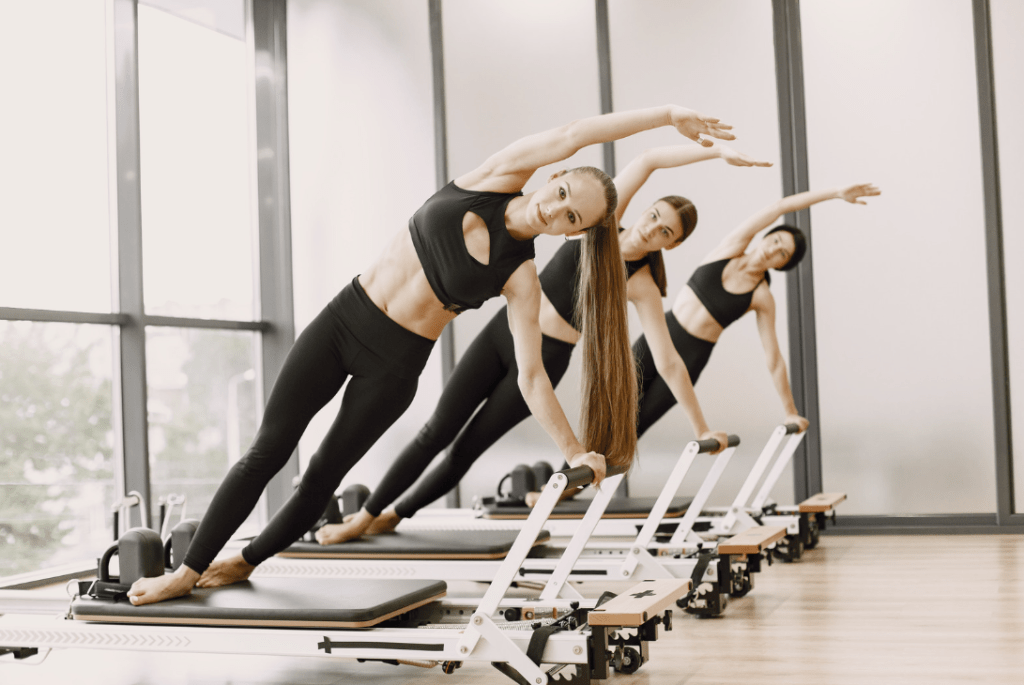
Pilates, renowned for its focus on core strength, flexibility, and overall body conditioning, has long been lauded for its myriad health benefits. However, amidst the clamour of fitness trends (Hot Pilates) and weight loss solutions, a pertinent question arises: Can Pilates truly aid in weight loss? Beyond its reputation as a low-impact exercise method, does Pilates possess the transformative power to shed excess pounds and sculpt a leaner physique?
The Basics
Pilates, founded by (no surprise here) Joseph Pilates in the early 20th century, emerged as a system of exercise aimed at improving physical and mental well-being [1]. Initially utilised as a rehabilitation method for injured dancers, Pilates has since gained global popularity for its focus on core strength, flexibility, and overall body conditioning.
Although Pilates does not burn a significant amount of calories, studies have found that it can reduce body weight [2]. Pilates can be greatly effective for those people suffering injuries or who struggle with high impact exercise, as it does not put as much strain on the joints and bones of the body like other forms of exercise such as running and weight training [3].
Similar to yoga, this form of exercise pertains to primarily posture, balance, flexibility and mind-body connection. There is more of a focus on core strength, unlike yoga which favours balance and flexibility, as Pilates is all about strengthening the body and core through stretches and pulsing movements.
How Pilates Can Change The Body
Pilates offers a holistic approach to fitness, capable of catalysing profound changes in the body. Central to its transformative power is its focus on core muscles—the deep abdominal muscles, pelvic floor, and back muscles—known as the “powerhouse.” Through a series of controlled movements and precise alignment, Pilates strengthens these core muscles, fostering stability, balance, and control.
One of the most noticeable changes Pilates can bring about is the development of long, lean muscles. Unlike traditional strength training that may bulk up muscles, Pilates emphasises elongating and strengthening muscles simultaneously, resulting in a more streamlined physique. Additionally, Pilates enhances flexibility by systematically stretching and lengthening muscles, promoting a greater range of motion and preventing injury.
Improved posture is another hallmark of Pilates practice. By emphasising proper alignment and spinal articulation, Pilates helps to correct imbalances and alignment issues, leading to a taller, more upright posture. This not only enhances physical appearance but also reduces strain on the body during everyday activities.
Beyond aesthetics, Pilates cultivates functional fitness by enhancing overall body awareness and control. By engaging the mind and body in tandem, Pilates fosters mindfulness, concentration, and body connection. This heightened awareness translates into improved coordination, agility, and proprioception—key components of physical prowess and injury prevention.
Consistent Pilates practice can lead to a myriad of benefits, including increased muscle tone, enhanced flexibility, improved posture, and overall functional fitness, making it a versatile and effective exercise regimen for individuals of all ages and fitness levels.
Mind-Body Connection
Pilates is renowned for its ability to foster a deep mind-body connection, promoting a harmonious integration of mental focus and physical movement. Through mindful breathing techniques and precise, controlled movements, practitioners are encouraged to centre their attention on the present moment, cultivating mindfulness and awareness of bodily sensations.
By synchronising breath with movement, Pilates instils a sense of flow and rhythm, facilitating a heightened sense of bodily awareness. This conscious engagement with movement promotes a profound understanding of biomechanics and alignment, empowering individuals to move with precision and grace.
Moreover, Pilates emphasises the importance of mental concentration and focus during each exercise, encouraging practitioners to engage not only their bodies but also their minds. This mindful approach to exercise not only enhances physical performance but also nurtures mental clarity, resilience, and emotional well-being.
Ultimately, Pilates serves as a powerful vehicle for cultivating the mind-body connection, fostering a deeper appreciation and understanding of the intricate relationship between physical movement and mental awareness.
How Can Pilates Aid Weight Loss?
Pilates can aid weight loss through various mechanisms, including calorie expenditure, muscle building, and improved metabolic function. While Pilates may not burn as many calories as high-intensity cardiovascular exercises like running or cycling, it still contributes to weight loss by promoting lean muscle growth and enhancing metabolic rate.
During a Pilates session, the focus on engaging multiple muscle groups simultaneously increases energy expenditure, helping to burn calories and fat. Additionally, Pilates exercises, particularly those performed on the reformer or with resistance bands, build lean muscle mass. Unlike fat tissue, muscle tissue is metabolically active, meaning it burns calories even at rest, thereby contributing to increased basal metabolic rate (BMR).
Furthermore, Pilates can influence body composition by promoting a phenomenon known as “body recomposition.” [4] As individuals engage in Pilates regularly, they may experience a decrease in body fat percentage while simultaneously increasing muscle mass. This shift in body composition not only leads to a leaner, more toned physique but also improves overall metabolic health and enhances the body’s ability to burn calories efficiently.
Conclusion
In summary, while Pilates may not result in rapid weight loss on its own, its combination of calorie expenditure, muscle building, and body recomposition can contribute to sustainable and long-term weight management efforts. Moreover, Pilates offers additional benefits such as improved posture, flexibility, and overall physical well-being, making it a valuable component of a comprehensive weight loss program.
Alone, Pilates cannot realistically cause weight loss. However, if paired with other forms of exercise such as low-impact walking, as well as a good diet, Pilates can make a great impact on lean muscle building, toning, and ultimately weight loss. It is important to note that weight loss it the result of maintaining calorie deficit – thus a good diet is what is required for consistent results.
Disclaimer: I am not a nutritionist, but I am working towards my qualification in Personal Training, through which I have learnt a lot about which exercises are ideal for maintaining weight loss and building lean muscle mass, whilst also covering the basic of nutrition. Keep an eye out on my blog for Personal Training articles when I am fully qualified!
References
[1] https://archive.org/details/pilatesreturntol00jose/page/12

Leave a comment