
This year BEAT Eating Disorders UK are focusing on ARFID (Avoidant/Restrictive Intake of Food Disorder) as their ‘eating disorder spotlight’.
What is ARFID?
Avoidant/Restrictive Food Intake Disorder (ARFID), also known as selective eating disorder, is a condition characterised by individuals avoiding certain foods or types of food, restricting overall food intake, or both. ARFID can affect people of any age, from children to adults. Unlike other eating disorders, such as anorexia nervosa or bulimia nervosa, ARFID is not defined by concerns about weight or body image.
ARFID can manifest in various ways, including:
- Limited Food Intake: Individuals with ARFID may eat a very restricted range of foods, often avoiding entire food groups or specific textures, colours, or temperatures.
- Nutritional Deficiencies: Restrictive eating patterns in ARFID can lead to severe nutritional deficiencies, affecting physical health and development. Weight loss is not a requirement for an ARFID diagnosis.
- Psychological Distress: People with ARFID may experience anxiety or distress related to food, eating, or mealtimes. They may avoid social situations involving food or feel anxious when faced with unfamiliar foods.
- Sensory Sensitivities: Some individuals with ARFID have heightened sensitivity to the taste, texture, smell, or appearance of certain foods, leading to avoidance or restriction based on sensory experiences.
- Appetite and Interest in Eating: Some individuals with ARFID may have a poor appetite or lack interest in eating, finding meals to be unenjoyable or burdensome.
ARFID can co-occur with other conditions such as anxiety disorders, autism spectrum disorder, ADHD, or medical conditions. It may have a longstanding presence or develop more recently.
Diagnosing ARFID involves ruling out other potential causes for restrictive eating, such as religious or cultural fasting, allergies, or medical conditions affecting appetite or digestion. Treatment for ARFID typically involves a multidisciplinary approach, including nutritional counselling, cognitive-behavioural therapy (CBT), exposure therapy, and family-based interventions, particularly for children and adolescents.
Recognising the signs of ARFID and seeking appropriate support and treatment are essential for addressing the physical and psychological effects of the disorder and promoting recovery.
If you have been made upset by reading this, or feel triggered, please reach out to helplines such as BEAT or Mind – or even DM me on my socials
Fundraiser
Please keep sharing your love on my JustGiving page – raising money for BEAT Eating Disorders UK.
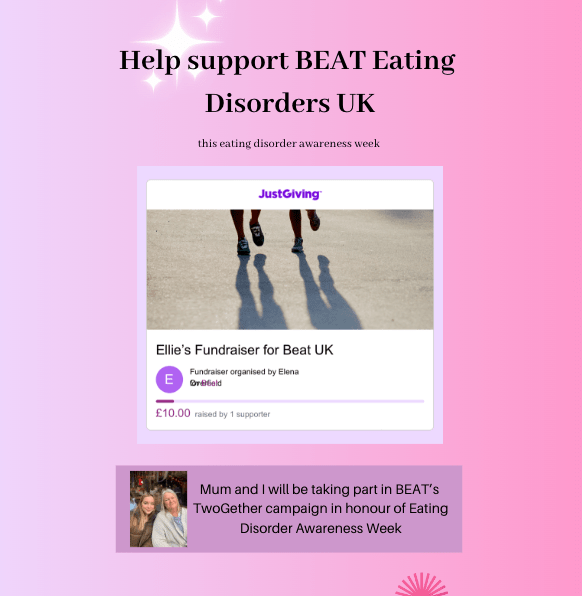
If you are able to (and there’s no pressure) here’s the link to the JustGiving page. Our aim is to raise £150 this week, so every little helps <3

Leave a comment