
It’s Eating Disorder Awareness Week 2024! Last year, I shared my own experience with eating disorders and since then I have openly spoken about various sub-themes related to disordered eating. This year, I am going to reiterate what I talked about last year, but what’s different is that I have a better understanding of eating disorders, since I have been in recovery for almost two years now.
So, let’s get into it. I’m not going to sugar coat this post so I hope you’re ready. If you are currently suffering from an eating disorder, or have been affected by someone else suffering from one, please be mindful when reading this post that it may cause upsetting feelings or triggers.
Please note that this post, and the others scheduled this week, are designed to educate, inform and advocate for eating disorder awareness. This is also my personal opinion, as someone who has been through eating disorders herself, so please don’t take my advice as the be-all and end-all.
Eating disorders can have profound effects on physical, emotional and mental health. That’s a known fact. But what about the hidden struggles behind an eating disorder, in particular anorexia or orthorexia? This post will explore those unspoken-about effects and go into more detail about the psychology behind eating disorders.
The Psychology of Eating Disorders
Eating disorders stem from a mix of psychological, biological, and environmental factors. Distorted body image leads to extreme dieting or excessive exercise in pursuit of an unrealistic ideal. Low self-esteem and feelings of inadequacy drive individuals to seek control through their eating habits. Underlying psychological issues like anxiety, depression, or trauma often fuel disordered eating as a coping mechanism. Societal pressures, particularly the Western ideal of thinness, exacerbate these issues. Treatment involves therapies like cognitive-behavioural therapy (CBT) to challenge distorted beliefs and develop healthier coping strategies. By addressing the psychological factors, individuals can work towards recovery and establish a healthier relationship with food and body image.
From my experience with an eating disorder and recovery, I have learnt that, for the most part, eating disorders stem from a feeling of lack of control. This is why statistics shot up during and post-COVID. There was increased stress and anxiety within everyone, and some people turned to eating disorders as an unhealthy coping mechanism. There was also a heightened focus on health and body image, with the rise of YouTube home workouts by the likes of Joe Wicks. Public health messaging emphasising the importance of health and well-being during the pandemic, coupled with increased time spent on social media and virtual platforms, may have intensified concerns about body imaged and fuelled disordered eating behaviours – which some people are still struggling with today.
When everything else in a person’s life feels out of control or uncertain, for example during a pandemic, they may turn to eating disorders as a way to have control over something: food and exercise. The ironic thing is, at the start you are so in control of it – the not eating and exercising more and more each day – but after a few months you also lose control of that and your eating disorder voice takes over. A lot of people compare eating disorders to being controlled by a different person (some people even give them a name), or, in my case, you are completely detached from yourself and you are not a person. I latched onto my eating disorder as a way to have some control in my life, but it quickly spiral and I even lost control of that, which is why it is an endless cycle of control.
The Hidden Effects of Eating Disorders
With my experience, there are dozens of underlying effects from an eating disorder. The most obvious effect is weight loss, as well as stomach issues, such as bloating, constipation or diarrhoea. The effects listed below are those that not many people know about, and unfortunately it takes experiencing disorders like anorexia to understand them:
Social Effects
- Relationship Strain: Eating disorders can strain relationships with family members, friends, and romantic partners, as individuals may become withdrawn, secretive, or defensive about their eating behaviours.
- Social Isolation: Fear of judgment or criticism about one’s appearance or eating habits may lead individuals to avoid social gatherings, restaurants, or situations involving food, contributing to social isolation and loneliness.
- Peer Influence: Peer pressure and societal norms regarding beauty and thinness can exacerbate body image concerns and eating disorder behaviours, particularly among adolescents and young adults who are highly influenced by their peers.
Cognitive Effects:
- Impaired Concentration: Malnutrition and fluctuations in blood sugar levels can impair cognitive function, leading to difficulties with concentration, memory, and decision-making.
- Cognitive Rigidity: Eating disorders are often characterized by rigid, black-and-white thinking patterns related to food, weight, and body image, making it challenging for individuals to adopt flexible or adaptive coping strategies.
- Perfectionism: Many individuals with eating disorders exhibit perfectionistic tendencies, setting unrealistic standards for themselves in terms of appearance, diet, and exercise, which can contribute to the development and maintenance of disordered eating behaviours.
Emotional Effects:
- Low self-esteem and body dysmorphia, leading to bodychecking and comparison: Eating disorders often stem from distorted body image and dissatisfaction with one’s appearance, contributing to low self-esteem and feelings of inadequacy.
- Mood swings: Fluctuations in blood sugar levels and hormonal imbalances associated with eating disorders can lead to mood swings, irritability, and emotional instability.
- Depression and anxiety: Eating disorders frequently co-occur with depression and anxiety disorders, with individuals experiencing feelings of hopelessness, worthlessness, and intense anxiety about food, weight, and body image.
- OCD behaviours: only eating at a certain time, with certain utensils etc., can arise from eating disorders. Anxiety develops when one cannot act on these behaviours, for example going to eat at a restaurant or a friend’s house.
- Obsessive thoughts: Preoccupation with food, weight, and body shape can consume a person’s thoughts, interfering with their ability to focus on other aspects of life and leading to obsessive-compulsive behaviours.
- Social withdrawal: Shame, guilt, and embarrassment related to eating behaviours and body image concerns may lead individuals to withdraw from social activities and isolate themselves from friends and family.
Physical Health Effects:
- Weight fluctuations: Eating disorders can result in significant weight fluctuations, including extreme weight loss in conditions like anorexia nervosa or fluctuations in weight due to binge eating episodes in disorders like bulimia nervosa.
- Gastro problems: Purging behaviours associated with bulimia nervosa, such as self-induced vomiting or laxative abuse, can cause gastrointestinal issues such as acid reflux, electrolyte imbalances, and damage to the oesophagus or stomach.
- Hormonal imbalance: Eating disorders can disrupt hormonal balance, leading to irregular menstrual cycles, infertility, and hormonal deficiencies that affect various bodily functions.
- CV complications: Prolonged malnutrition, dehydration, and electrolyte imbalances can strain the cardiovascular system, leading to low blood pressure, irregular heart rhythms, and even cardiac arrest in severe cases
- Acne: nutritional deficiencies, increased stress levels and hormonal imbalances can all lead to acne and breakouts.
- Feeling cold all the time: due to the lack of energy, your body starts to prioritise the most important bodily processes, like metabolism, breathing and circulation. Therefore, body temperature isn’t number one on the list, thus people with anorexia often feel cold all the time as there is not enough energy in the body (due to malnutrition) to warm you up.
If you have been made upset by reading this, or feel triggered, please reach out to helplines such as BEAT or Mind – or even DM me on my socials
Fundraiser
Please keep sharing your love on my JustGiving page – raising money for BEAT Eating Disorders UK.
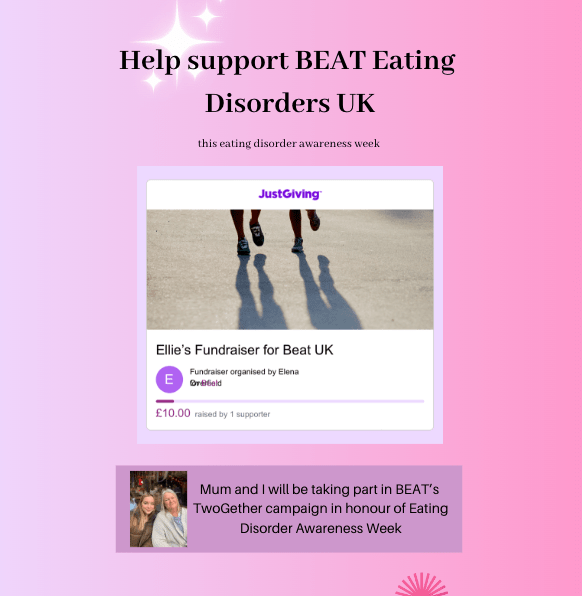
If you are able to (and there’s no pressure) here’s the link to the JustGiving page. Our aim is to raise £150 this week, so every little helps <3

Leave a comment